

The LOCALS Club, September 30 2026
Excerpts from the story by Summer Chandler -
The Cardiff resident and community organizer is running for Encinitas City Council District 3. And while national politics tends to eat up all the oxygen, local government is where things get remarkably personal. Housing. Streets. Development. Small businesses. Public space. How we move around town. What gets preserved and what gets changed. And how we know this is all going on. These are decisions we live with and I think we need to sit with more often and with less stigma. It’s okay to talk politics. They affect our daily lives.
I also love that when you talk about community you're naturally talking about the system as a whole. Clean water, space for nature, and not overcrowd us here by the beach. Some see this as prioritizing nature and a bunch of yelling activists. How do your views truly affect all sides of the aisle on this topic?
“I think most of us are on the same side when it comes to development. We need to preserve open space as much as we can, to maintain soil health and keep our shade and life giving trees. As the city grows, open space also becomes more valuable and needs to be protected. And as much as we can we should be selective about the type of housing we want to see. I personally do not think we need more luxury units in our city.” -Arielle Golden
San Diego Union Tribune, September 18 2026
Story by Barbara Henry
Views on the use of the Flock camera systems at city intersections and federal agents’ immigration enforcement activity divided the six candidates seeking Encinitas city elected positions Thursday during a voter forum.
Sponsored by the League of Women Voters North County, San Diego organization, the event attracted a nearly standing room-only crowd of some 150 people at St. Andrew’s Episcopal Church.
Encinitas has three city races on the Nov. 3 ballot — the mayor’s position, plus the District 3 and District 4 City Council races. There are two candidates running for each of the three spots on the ballot, and all six people shared the stage during Thursday’s forum, answering pre-submitted questions in the league’s pre-determined rotation. While the candidates for each race sat next to each other, they didn’t often answer questions right after each other. Sometimes one candidate in a race went first, while the person’s opponent would be the last of the six people to answer the question.
On many questions, all six candidates were in agreement, but they split on some issues, particularly when it came to traffic camera use and U.S. Immigration & Customs Enforcement activities in Encinitas.
Incumbent Mayor Bruce Ehlers, District 4 Councilmember Marco San Antonio and Ed Sprague, one of the two District 3 council candidates, all said the city is doing what it can in a challenging situation when it comes to ICE enforcement, which has been ramping up since President Trump was elected.
Ehlers said Encinitas has created a web page developed to ICE activities within the city limits and posts information on arrests there. He said the city tries to get information from the federal government, but the response to its requests hasn’t been “real good.”
San Antonio said his parents were legal immigrants long ago, and “I believe ICE is doing their job.”
Sprague said most ICE activity in town is uneventful and ICE targets people who “need to go” because they have engaged in criminal activity.
The three other candidates had a different view.
Rimga Viskanta, a San Dieguito Union High School District board member who’s running for Encinitas mayor against Ehlers, said she believes some immigrants’ rights are being violated and said Encinitas needs to do more to support families whose loved ones have been arrested, especially in situations where the person’s immigration status falls in a gray area where they once were considered to be legal and now are not.
Brad Lefkowits, one of the founders of the Parents of Encinitas Union School District community group who’s running for the District 4 seat against San Antonio, said he wants Encinitas to start putting “more honest information” on the city’s web site, rather than what he called “Trump propaganda.”
Arielle Golden, former chair of the North County Food Policy Council who is seeking the District 3 council spot, said she believes “ICE is tearing apart our community,” and Encinitas needs to do more to make residents feel “less afraid.”
Candidates also split over Flock traffic cameras, which take pictures of license plates as vehicles pass by the solar-powered camera systems, then scan law enforcement data bases to see if the vehicles are stolen or involved in criminal activity.
San Antonio said he supported the use of a different type of camera system to catch red-light runners at intersections, but not the use of Flock systems, saying they capture more data about people and thus invade people’s privacy.
Both Sprague and Ehlers said they supported the use of Flock camera systems.
Viskanta said government policies need to keep up with the new technology and law enforcement should have limited access to the images.
Golden and Lefkowits both said they had met with the Sheriff’s captain who manages the Encinitas station to discuss the camera usage, and said they still had some concerns. Golden said she worried about how the camera company might use the data it collects, while Lefkowits said his gut reaction is that pausing the use of the cameras might be a good idea.
San Diego Union Tribune, September 22 2026
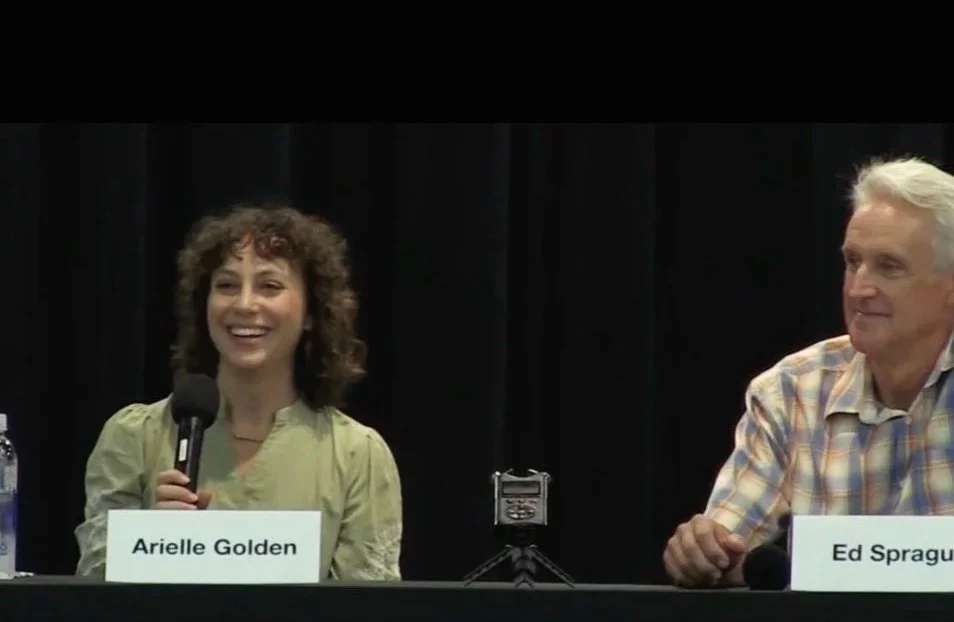
Excerpts from the story by Barbara Henry -
The two candidates for Encinitas City Council’s District 3 seat highlighted their differences at a voter forum last week, mentioning everything from their length of residency to their views on roadway improvements.
Arielle Golden, who has two young children and is a former chair of the North County Food Policy Council, said she is part of the more than 40 percent of the city’s residents who have moved here within the last two decades. She described herself as having a “forward-facing vision” that was optimistic, but realistic. She talked about making the streets safer for children to walk and bike, mentioning the challenges she’s faced doing this with her young children.
The two candidates also emphasized their differences when it came to state and national topics. In his opening statements, Sprague mentioned that he wanted to stand up “against one-size, fits-all” policies put out by the state Legislature, while Golden mentioned her support for reproductive rights, community integration and climate change programs.
Both candidates are making their first runs for the District 3 seat. The district, which mostly covers the Cardiff region, is represented by Joy Lyndes, who has decided not to seek re-election.
Sponsored by the Cardiff 101 Main Street’s Cardiff-by-the-Sea Town Council Committee, Tuesday’s forum drew a crowd of about 100 people, including a group of high school students. The two candidates were asked to answer 15 questions, which were compiled in advance based on e-mailed submissions from the community. Topics included everything from rent control for mobile home parks to the use plastic bollards on the edges of bike lanes.
In response to questions about the recent overhaul of Santa Fe Drive, which was pursued by a prior City Council and now is opposed by many of the current council members, Sprague said he thought the prior council shouldn’t have done such a large-scale reworking of the roadway, adding that the design of the south side of the roadway is of particular concern.
“I don’t think it’s a safety improvement … I’m looking for a redesign, which is sad,” he said.
Golden said she could support some changes, but definitely not the removal of the separated bike lane on the south side of the street, which is currently being considered.
The candidates also differed on:
Their positions on rent control for low-income mobile home parks. Golden said San Marcos has done this and she thought it was worth exploring in Encinitas, while Sprague said he had concerns about private property rights and balancing mobile home park owners’ needs with that of park renters.
Advice they’d give a high school student who worries about affording to live in Encinitas in the future. Sprague mentioned that teens do need to be realistic that “this is a high-demand area” and might want to consider living somewhere more affordable first, as he did as a young adult, and then move back later; while Golden said she’d like to explore new ways to build more affordable housing in town, including partnering with nonprofit development entities.
How to handle homelessness issues. Sprague said the city needs to continue to make certain its money is being well spent, saying Encinitas spends $1 million a year on various homeless-related programs; while Golden said she opposed the recent termination of the overnight parking lot program that served newly homeless people who were temporarily living in their vehicles.
But they both agreed when it came to plans to put a pedestrian crossing point under the railroad tracks at Verdi Avenue. Both said it was something the community would love to have.
ABC10 NEWS July 26 2026
Excerpts from the Story by Olivia Gonzalez-Britt
A pickup truck with tools and lunchboxes still inside, and a workday that never finished.
That's what community volunteers found after two men were detained by immigration agents last week in this construction site in a North County neighborhood.
The incident comes as ICE data shows more than 16,000 people were apprehended in San Diego County between January 20, 2025, and April 1, 2026. A period of just over 14 months.
In response to the uptick in detentions, some volunteers have formed community patrol groups to document immigration enforcement activity and help families after detentions.
One North County volunteer, who asked not to be identified because he fears retaliation, told me members do not interfere with federal operations. Instead, they observe enforcement activity, alert the community when detentions happen, and connect families with legal resources.
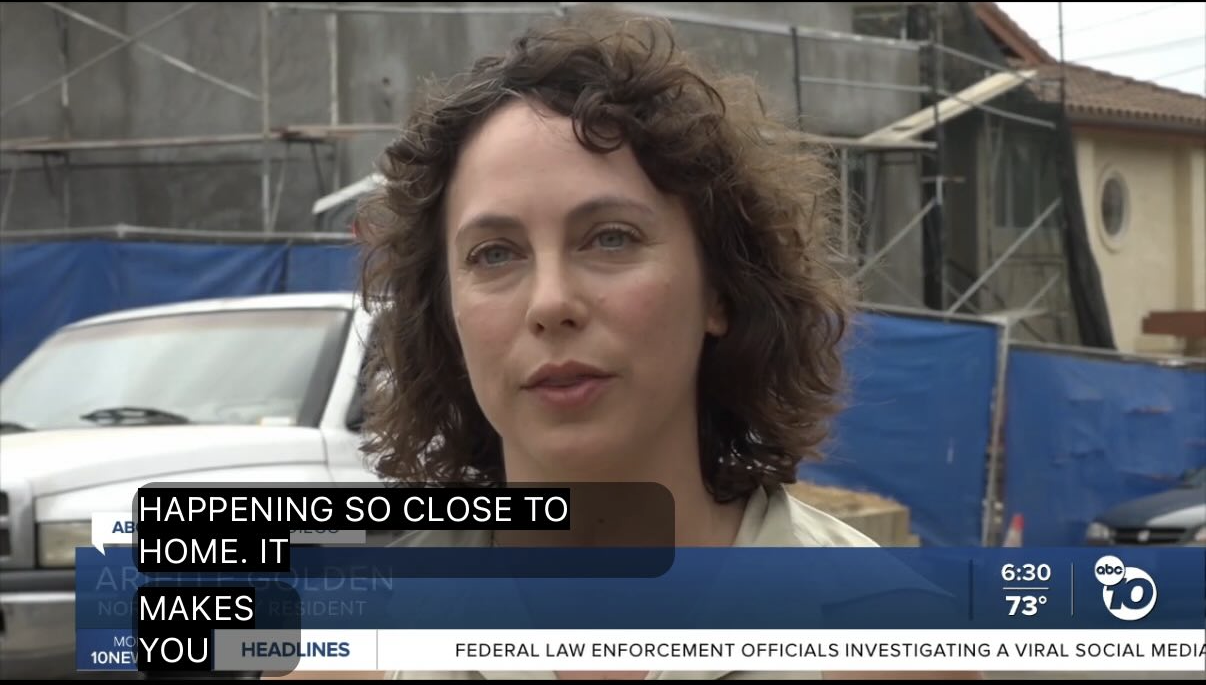
"Anytime the community comes together to support one another, I think we're doing what we're supposed to do," Arielle Golden, who lives on the same street where last week's detention happened, says.